
Your Team Creates Problems—Then Complains About Them
They start most fires themselves, then heroically fight them

Top executives often think that strategy is nothing but ‘extra work’ they don’t have time for. Even worse, some believe that strategy makes the company less ‘flexible’ in the ‘constantly changing world.’
As a CEO, you pay for these delusions—and you pay a lot. In companies with a strategy executives work less but deliver more.

Inside the Club today:
Your team is out of sync
External turbulence doesn’t create internal turmoil—but your team does
Two myths about why you don’t need a strategy
What you can do right now
Why executives often hate me at first
Save a minute on strategy, lose a day on execution.
When a CEO brings me in to facilitate the company’s strategy, their top executives often aren’t overly enthusiastic about the idea.
During our individual introductory interviews, they tell me something like:
“Of course we have a strategy, everything is fine.” However, for some reason, they can’t actually show it to me. “The strategy is in our heads” — well, you know how it goes.
“We don’t have the bandwidth for strategy right now. One day, tariffs suddenly spike. The next day, competitors cut prices, or key employees quit.” They think they will get back to strategy ‘sometime later’—when the high season is over, when they finish an important project—which means never.
“Strategy in the constantly changing world isn’t just useless, it’s harmful. It’s a three-year plan and it will slow us down.” I don’t know who taught them this bullshit about ‘a three-year plan,’ but I hear it all the time.
They don’t realise the lack of strategy creates the very chaos they fight every day.
To prove this, I run a simple test. You can easily try it yourself today.
First, I ask each executive to take a piece of paper and write down their main priorities for the quarter—things like ‘decreasing logistics costs,’ ‘increasing sales in channel X,’ or ‘reducing the average time-to-hire.’
I collect the papers without making any comments, and then I switch their attention. For the next hour or two, we build a market map or a list of the key market challenges.
Then, abruptly, I ask each of them to take a piece of paper again and write down their company’s main priorities for the year. And then I call a 30-minute break.
While they drink coffee and check their email, I summarise the answers from the papers on a flipchart. And every single time, I see the exact same picture. Honestly, it is frustrating.
The priorities of different departments simply do not match and often clash. For example, the CFO wants to cut payroll costs, while the HRD is trying to hire more expensive specialists.
The personal goals of top executives do not align with the company’s strategy. In plain English, executives are spending their time on tasks that do not support the company’s main priorities.
Every top executive sees the company’s strategy differently.
If I didn’t know for sure they worked for the same company, I would never have guessed it from their answers. Executives like to think of themselves as a special forces squad. But they look more like a school rock band at their first rehearsal.
And this is not a rare problem. The famous study shows that even in companies with a strategy (alas, only on paper) executives often struggle to name their company’s top priorities.
Of course, this leads to chaos. You can hire great experts for every role, but if they are out of sync, it means nothing.
When the executives return from the break, I show them my findings, and they are often shocked by what they see. “You are not an orchestra,” I tell them. “You are just a group of musicians, and everyone is playing their own tune. Instead of helping each other, you get in each other’s way and create problems that you then heroically fight.”
“External turbulence doesn’t create internal turmoil by itself. It just opens the door for chaos. But the turmoil you fight every day is something you create with your own hands. And only strategy can fix it.”
From that moment on, the executives always listen to me very closely.
I usually hear two typical objections to strategy. Let’s look at them one by one. Besides, executives often don’t understand what strategy actually means. I will explain this at the very end of the article.
“We don’t have bandwidth for strategy”
You need strategy for alignment. Basically, it answers two questions:
What the team should do.
What the team shouldn’t do.
Crucial: everyone must see both answers the same way. It doesn’t provide answers to every challenge, but at least it points in the right direction.
For example, a company faces a sharp rise in costs because of growing freight rates.
A team without a strategy reacts like a troop of boy scouts woken up in the middle of the night:
The team rushes to find a quick fix, but it clashes with other parts of the business. For example, you decide to move production to another region, but your infrastructure is not ready. This creates second-order chaos. A new problem pops up—like running out of stock—and you have to deal with it all over again.
Every department head looks out only for their own interests. The Head of Sales demands keeping prices low at all costs. The CFO demands raising prices to save the margin. Meanwhile, the Chief of Logistics is panicking, trying to find new warehouses in other regions.
The team does not know if they can pass the higher costs on to customers, because they never worked out their market positioning in advance.

How could strategy help?
1. A good strategy must include a risk assessment. This means finding critical vulnerabilities—the things that could break your business—and strengthening them before it happens.
2. Strategy provides a clear list of priorities that helps eliminate internal arguments.
3. Strategy helps you choose your pricing tactics in advance.
Strategy is your mental lens. If your executives use the same mental lens, and if your use the same lens every day, it makes your day-to-day work much easier.
And if your strategy focuses on creating your own unique customers—your Patrons—you don’t have to worry about external turbulence at all. Read more in my new mini book.
I have also decided to get back to making short videos. Want to see me and learn something useful? You can find the video at the end.
“Strategy slows us down”
A wise CEO is not someone with many ideas, but someone who knows which ones to greenlight.
The universe constantly offers us new ideas and opportunities. But without strategy, teams try to implement all of them, which only drags businesses deeper into turmoil, firefighting, and burnout.
On the other hand, strategy helps you see what to implement and what to postpone—or forget forever. Here are two examples:
Starlink and Ryanair
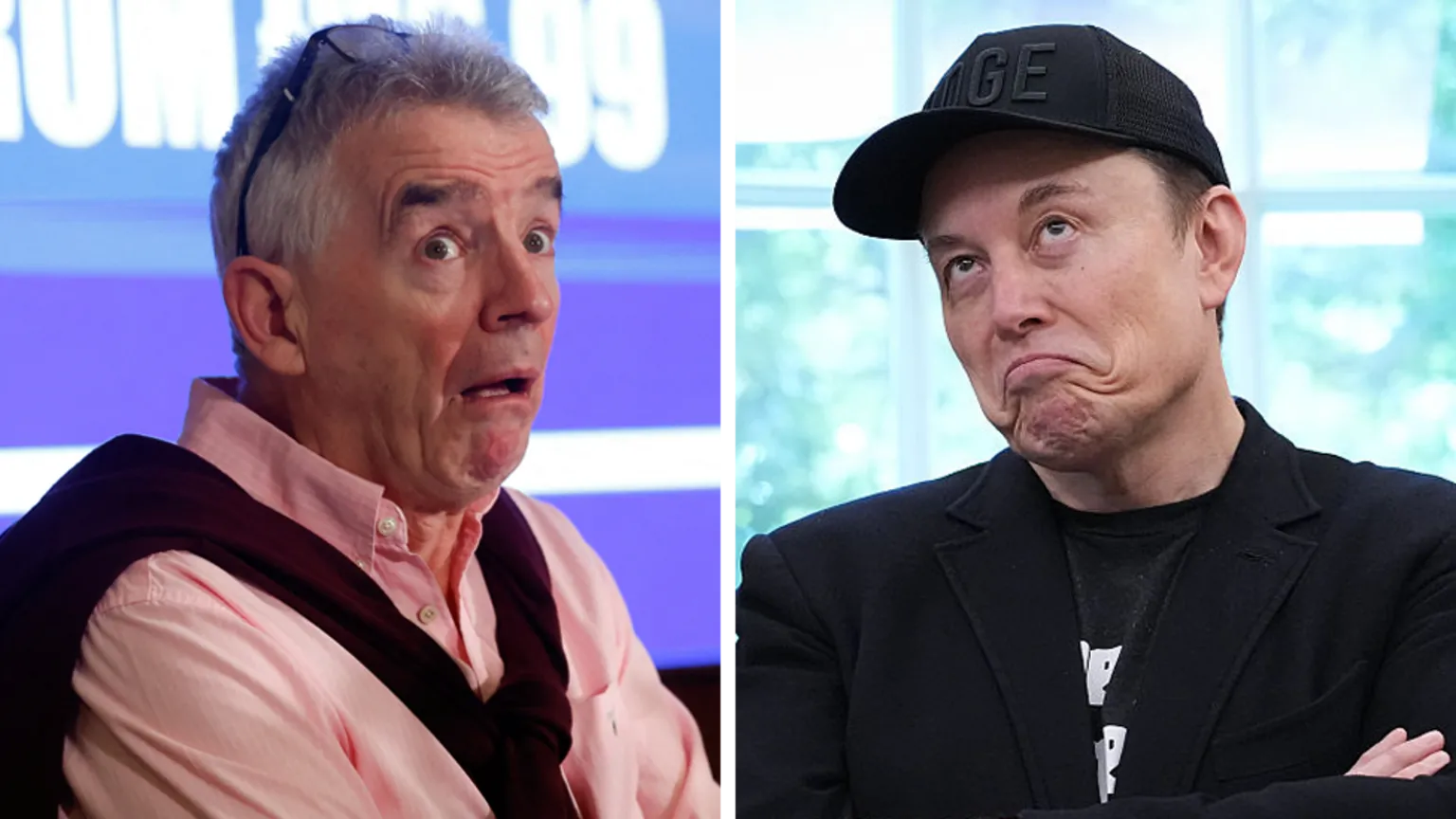
Recently, the European low-cost airline Ryanair refused to install Starlink terminals on its planes to provide onboard internet. When Elon Musk criticised Ryanair CEO Michael O’Leary for this decision, O’Leary simply called him an idiot. Ryanair focuses on short flights within Europe, averaging an hour and a half. For Ryanair, these terminals are just an extra headache with no clear long-term benefit. They don’t fit its strategy.
Hofer and E. Leclerc
Where I live, we have a discount retail chain called Hofer (an Aldi subsidiary). It positions itself as a place where you can save money. It successfully sells SIM cards under its own brand at very low rates. It’s a grocery chain, but it sells a lot of them because it fits their positioning. The chain launched a virtual operator—an MVNO—and generated extra revenue without heavy investment.
Another grocery chain, E. Leclerc, positions itself as a place for fine foods and high-quality imported goods. It doesn’t sell SIM cards—and it shouldn’t. It wouldn’t strengthen the chain’s positioning, even if it would bring in extra revenue.
Strategy separates opportunities into those that strengthen your company in the long term, and those that offer only a moment of benefit—and a lifetime of headaches.
Follow your strategy, and maybe one day you can call Elon Musk an idiot, too.
What can you do right now?
A strategy is not a plan—and definitely not a three-year plan. Anyone writing a three-year plan in 2026 needs medical help.
But strategy is also not just about goals, KPIs, and a vision. It is a set of principles that helps you make daily decisions.
Your suppliers have raised their prices. What is the best move? Look for the answer in your strategy.
Competitors have slashed prices across the market. Should you match them or keep your prices the same? Your strategy must give you the answer.
My Customer-Axis Framework is a tool that helps you make daily decisions, guided by Navigational Principles you create just once.
A good strategy works when your top managers can open it in any difficult situation and immediately see what to do. I designed the Customer-Axis Framework for exactly this reason, and it works.
Want to see how much your company suffers from crises caused by internal friction and a lack of strategy? You have three options:
Take the test described at the beginning of this text yourself.
Upgrade to a paid subscription to get a more detailed internal diagnostic checklist by the end of the week, available exclusively to paid subscribers. (By the way, if you want a corporate subscription for your team but don’t want to pay with credit card, just let us know and we will send you an invoice.)
Book a three-day audit for your company. Together, we’ll pinpoint the 2-3 hidden problems standing between you and higher margin and profitability, and map out a tight 2-3 month roadmap to eliminate them. It’s the fastest way to give your team strategic clarity, kill the operational noise, and lock in long-term results.
And here’s my first video about strategic reframing:
A lot of executives think strategy competes with execution for time. In reality, strategy is what prevents execution from fragmenting into a hundred conflicting priorities.
The hidden cost of poor strategy isn't bad planning. It's internal friction. Smart people pulled and pulling in different directions, solving problems they accidentally created for each another. That's why alignment often looks like a productivity tool disguised as a strategic one.
Svyatoslav, this is painfully accurate.
Many teams do not have an execution problem. They have an alignment problem that keeps disguising itself as urgency.
The point that stood out to me is that strategy is not a three-year plan. It is a daily decision filter. Without that filter, smart executives create conflicting priorities, then spend their energy fighting the fires those conflicts produce.
One additional thought: strategy should reduce meetings, not create more. If the strategy is clear, people should need fewer debates to make better decisions.