
Stop Blaming Execution
Why strategies die on paper, part 2

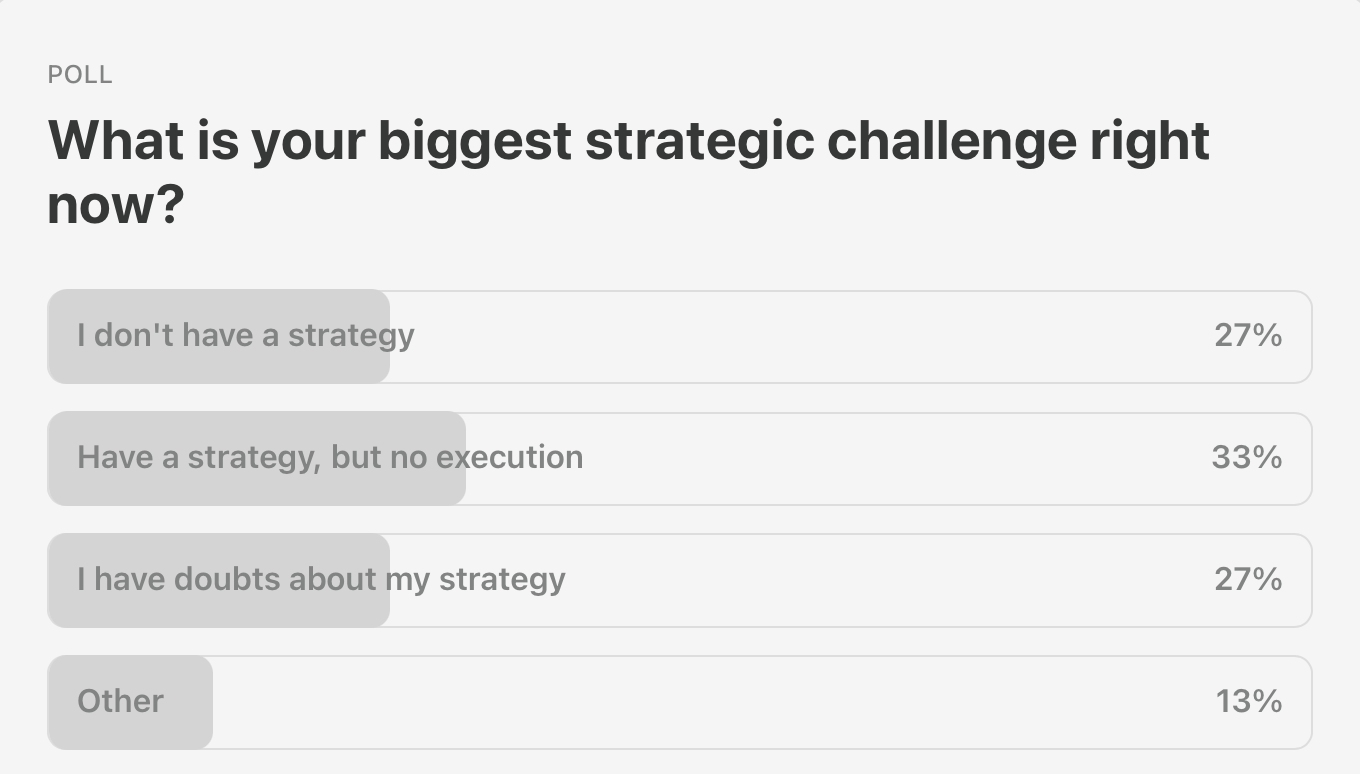
Statistics show that most CEOs believe they have a ‘great’ strategy, but execution lets them down. My own polls confirm this (see the data at the end).
But I see a different problem. Most strategies die before you even finish thinking them through, because you build them on a seductive but flawed idea. If you view technological progress as a passing train — an external force you simply need to jump onto — you are walking straight into a dangerous trap.
If you base your strategy on ‘tech trends,’ ‘early-stage markets,’ ‘disruptive innovation,’ or other shiny things, you’re starting from the finish line.

Inside the Club today:
Can you catch the right train? Do you need it?
Innovation alone doesn't determine a technology's success.
Technologies that promised big but failed.
Many strategies fail because they are built around a single hope.
Stop blaming execution
CEO uncomfortable questions
Can you catch the right train?
Recently, a subscriber invited me to speak at a private CEO club in her country. It wasn’t a lecture — it was more of a conversation about strategy.
About 20 CEOs joined us, and we had a great discussion. But we looked at strategy from completely different angles.
One viewpoint dominated the room:
Strategy is all about ‘catching the wave’. Since it’s hard to grow in mature markets, every CEO should look for ‘emerging trends’.
These waves are driven by technology. Fast internet enabled Amazon and Netflix. High-capacity batteries powered Tesla. GPS in smartphones made Uber possible.
A CEO must find a promising early-stage market — just like the e-commerce market in 1995, the streaming market in 2007, or the AI market in 2022.
Creating a new market from scratch ‘too risky’. The goal is to join a trend while it’s still in its infancy, but right before it becomes obvious to everyone.
It looks like an attempt to catch the fastest train to the future just as it is leaving. Get on too early, and you might lose your investment before you see a single dollar of profit. Get on too late, and don’t be surprised if you have to stand in a crowded second-class carriage because all the best seats are already gone.
Like the characters in the Harry Potter books, the CEOs are looking for their platform #9 and 3/4 to take them to Hogwarts.
It’s not that you can’t do it this way — sure you can. The problem, though, isn’t just that you never know for sure which train will catapult you into the future.
The problem is that these trains don’t exist.
The Innovation Beauty Contest
Can you imagine a startup that raised $1.7 billion in the initial investment and shut down only six months after launch? Its name was Quibi.
Quibi’s business model involved creating 10-minute clips that would be watched on mobile during commutes. Instead of the usual YouTube or TikTok creators, the company relied on major celebrities. Quibi also tried to charge users to watch the videos.
Unfortunately, it launched in 2020, when most commuters stayed home. But more importantly, customers looked at it and asked: “Why do we even need this?”
I’m sure that in 2046 or 2056, when Elon Musk finally launches his robotaxi, users will ask the exact same questions.
Quibi is in good company, alongside products like the Segway, Google Glass, Juicero, and many others. To date, Google alone has killed 306 products. Since the company is 28 years old, that means about 11 failed products per year.
95% of generative AI pilots at companies fail. 80% AI startups will fail by the end of the year. We discussed the topic a week ago.
Soon, ridiculous inventions like hands-free umbrellas and robotic fuel pumps will join them.
All these failed startups, products, and initiatives tried to catch the fastest train. But it just doesn’t work that way.
Innovation alone doesn’t determine a technology’s success. Customers do.
Imagine a contest. Inventors walk onto the stage one by one to present their ideas. And the judges are... no, not investors. Customers. Among them is your cousin — you gave her a new food processor for her birthday, but she still can’t figure out how to turn it on. And your neighbour, who still uses Nokia 3310.
If they don’t see within a few seconds why they need a new technology, they vote against it. It doesn’t matter if the technology is good or bad — you will never hear about it again.
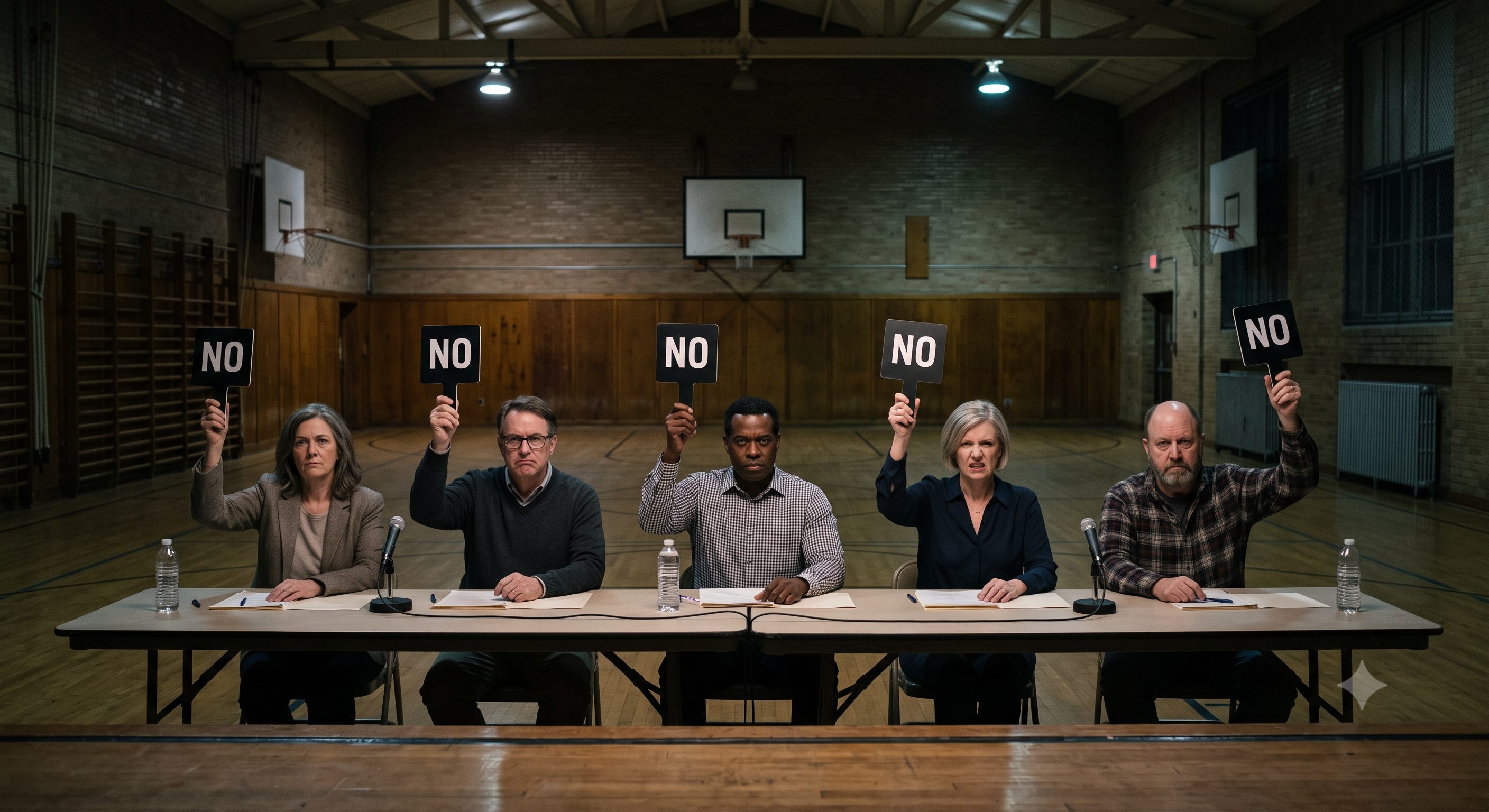
NFTs, 3D printing, the Metaverse, AR, VR, blockchain, Web3, ‘no-code’, Amazon Go, Google Glass, and 3D TVs — all these inventions promised to change the world. But customers just shrugged and walked away. I call this ‘a product in search of customers.’
The world doesn’t change at the speed of technology. It changes at the speed of human habits. If it takes people 50 years to change a habit, it will take a technology exactly that long — and not a day less — to conquer the world.
Amazon launched 31 years ago, but online retail’s share in the US is still under 17%. 14% of businesses still use typewriters. I’m not kidding.
All you need is a pen, a piece of paper, and a good idea
A new business opportunity does not emerge when a new technology appears. It happens when that technology brings new ways to meet important needs. And often you even don’t need a new technology.
In 2016, Gartner predicted that by 2020, 100 million people would shop in augmented reality. It never happened—because there was no real customer need for AR to meet.
At the same time, the need to communicate has always been there. Centuries ago, people could only do it face-to-face. The postal service, the telegraph, the telephone, email, messaging apps, social media—all these technologies simply made communication faster, easier, and more convenient.
The need to communicate is one of the 16 basic desires that drive your customers' behavior. More on this next Tuesday.
If you ban email, messengers, and phones, people will talk to each other anyway. If you ban AR, no one will notice.
Amazon, Google, Netflix, Salesforce, Stripe, and Tesla became successful not because they were ‘in the right place at the right time’ or ‘entered early-stage markets.’ They succeeded because they created their own customers.
Creating customers means finding a massive need that existing solutions don’t fully satisfy—and often, one that customers themselves don’t even realise they have—and then finding a much better way to meet it. If you turn someone who didn’t even realise they had a need into someone who pays you money, you’ve created a customer.
Technology can help. But sometimes, all you need is a pen, a piece of paper, and a good idea.
Ryanair, Lululemon, Mixue Ice Cream & Tea, Liquid Death, Substack, Crocs, Stanley cups, Labubu, Barnes & Noble, On, BrewDog, Oatly, Warby Parker — all these businesses succeeded in crowded markets. And AI agents had nothing to do with it.

Stop Blaming Execution
Some strategies fail due to poor execution (though I don’t believe in such a thing as ‘poor execution’—that is a topic for my next YouTube video).
But in my experience, far more strategies fail because they are built around a single hope: finding a booming market that will elevate them straight to success like a lift.
In the real world, you never know which lift will take you to the top. I know a few guys who lost millions on ICOs—remember that craze back in 2017?
But if you find an unmet customer need and know how to meet it efficiently, success depends entirely on your managerial skills. And on the contrary—when you take a new technology and ask, ‘How can I use it?’, you are starting from the finish line.
I talk about how to identify customer needs and create customers in my book Create Customers No Competitor Can Steal: The Strategy That Makes Market Uncertainty Irrelevant. Paid subscribers and founding members get the book for free.
CEO uncomfortable questions:
Are the three most important ideas in your strategy based on customer needs?
What role does technology play in your strategy? Is it a tool to create customer value, or do you think it is important on its own?
Over the past three years, how many times have you successfully introduced a new technology, but it didn’t bring the expected results?
How will the technology you are introducing right now make your customers more loyal to your company?
If you want to check whether your strategy is based on customer needs, just reply to this email, and we’ll arrange a quick audit.
Next Tuesday we’ll talk about 16 basic human needs that drive your customers’ behavior. Stay tuned!
Paid subscribers and founding members can find more below the paywall line.
An important update for club members
Just a reminder: this is not just a newsletter, but a club for deep-thinking CEOs.
As a club member, you can:
– Suggest topics. Just reply to this email and let me know what challenge is on your mind. I will try to cover it in an upcoming issue.
– Invite others. If you think my articles would be useful to other CEOs you know, simply forward this email to them.
– Ask deep questions. If you are a paid subscriber, you can send me a deeper question about your strategic challenge, and I will write a detailed response. I write every reply myself.
– Set up a call. If you are a founding member, we can organise a call to discuss your question.
I also encourage you to take part in our polls. If you do, I will publish the results. This way, you will know what other club members think about key issues.
To ensure your answers are completely anonymous, I have moved the polls to a third-party platform. No one—including me—will know who voted or how.
This week’s poll is about AI. How will AI impact regular business in the next 5 years? Vote here, no registration required.
Here’s how you voted last week:
Some deeper insights for paid subscribers:
